
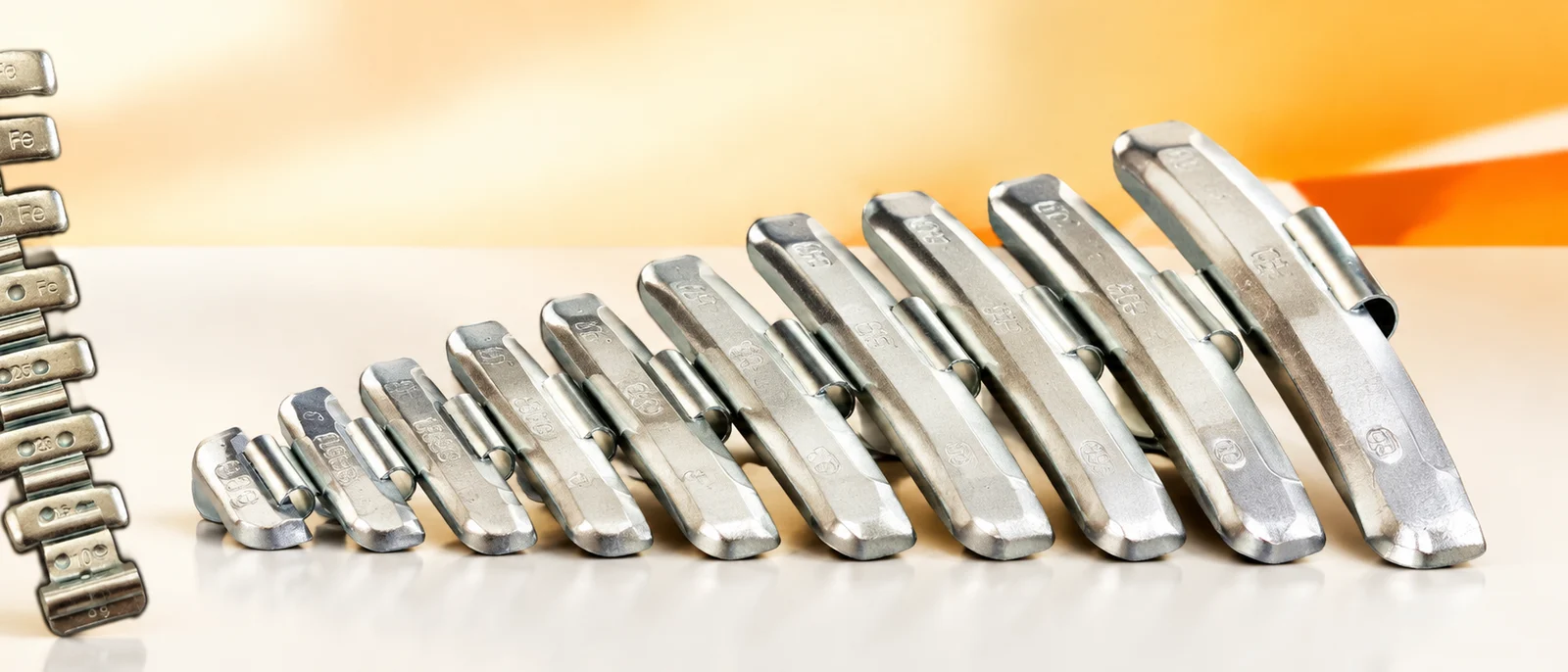
Clip-on wheel weights are one of the highest-turnover items in any tyre workshop. They attach to the rim flange with a spring steel clip, which makes them fast to fit and secure under load - the reason they remain the default for steel wheels. This guide covers what to look for when buying clip-on weights in bulk.
How clip-on weights work
A clip-on weight is a cast or stamped mass attached to a steel clip. The clip grips the rolled edge (flange) of the wheel rim, so the weight sits on the rim rather than on the inner barrel. Because the clip must match the flange profile, clip-on weights are supplied in several profile families (see our clip profile guide).
Clip-on vs adhesive
| Feature | Clip-on | Adhesive (stick-on) |
|---|---|---|
| Mounting position | Rim flange (edge) | Inner barrel of the rim |
| Best for | Steel wheels, some alloy and truck rims | Alloy and aluminum wheels |
| Weight range | 5 g to 500 g | Mainly 5 g to 60 g |
| Installation | Needs the correct clip profile | Needs a clean, dry surface |
| Visibility | Visible on the rim edge | Hidden behind the wheel face |
The rule most workshops start with: steel rims take clip-on weights, alloy rims take adhesive weights. The real decision is the flange profile, which is covered in the two sections below. Many distributors stock both - see our adhesive wheel weights guide for the stick-on range.
Clip-on wheel weights for steel wheels
Steel wheels are the natural home of the clip-on weight. The rolled steel flange is thick and consistent, so a spring clip can bite into it and stay put under load. On a steel rim, specify an MC clip profile - the standard steel-wheel clip - and choose the mass from the balancer reading.
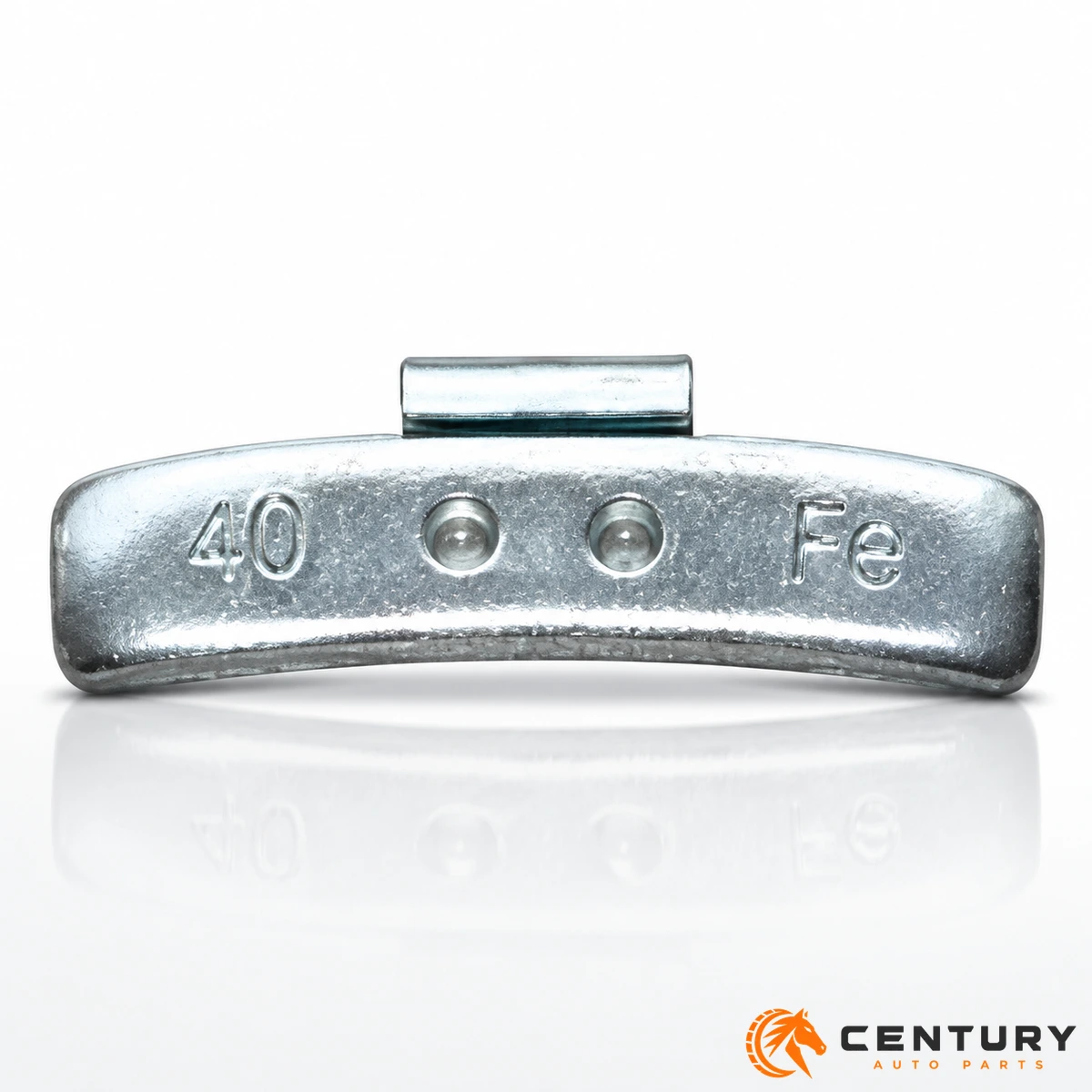
- Weight range - 5 g to 60 g in 5 g steps covers almost every passenger car steel wheel.
- Surface - galvanized or plastic coated Fe resists rust on winter wheels, trailer rims and farm equipment.
- Flange condition - a heavily corroded or bent flange will not hold a clip securely; clean or replace the wheel instead of forcing a heavier weight on.
- Truck and light truck - commercial steel rims use hook-type clips sized to the rim width (6.50, 7.00, 7.50 and 9.0) with masses from 50 g to 300 g.
Clip-on wheel weights for aluminum (alloy) wheels
Alloy wheels can take clip-on weights, but only with the correct alloy clip profile - usually FN or FNC - and only where the flange is designed for it. Many alloy wheels have a thin, painted or decorative flange, and on those an adhesive weight on the inner barrel is the safer choice. The rule is not "never clip-on an alloy"; it is "match the clip to the flange".
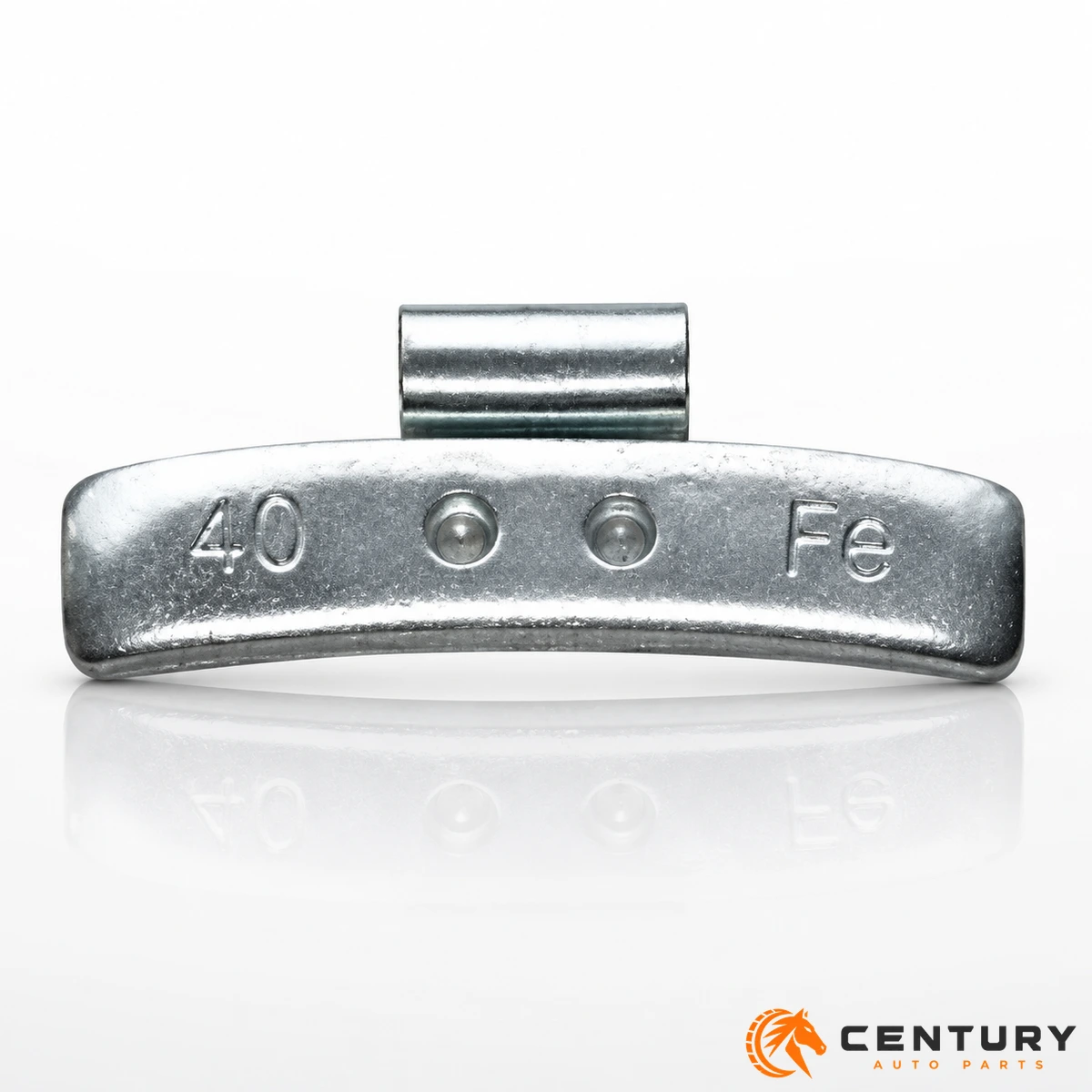
- Profile first - FN and FNC clips are shaped for alloy flanges; an MC steel clip will not seat correctly.
- Protect the finish - a coated clip reduces the risk of chipping the lacquer and of galvanic corrosion between steel and aluminium.
- When to switch to adhesive - thin or damaged flanges, or any wheel where the clip leaves a visible mark on the face.
If the flange is too thin for a clip, use adhesive wheel weights instead, and check the clip profile guide before specifying a mixed order.
Materials: Fe, Zn and Pb
| Material | Density | Compliance | Typical positioning |
|---|---|---|---|
| Fe (steel) | About 7.8 g/cm³ | Lead-free; accepted worldwide | Standard range |
| Zn (zinc) | About 7.1 g/cm³ | Lead-free; strong in Europe | Premium / harsh climates |
| Pb (lead) | About 11.3 g/cm³ | Restricted or banned in some markets | Legacy markets only |
Check compliance before you order. Lead is restricted or phased out in the EU, the UK, Canada and several US states, so steel and zinc are the safe default. See our Fe vs Pb comparison for the full detail.
Weight sizes and packing
Clip-on weights are sold by mass, in gram series for most markets and OZ series for the US and UK. Packing follows the weight: light car weights are boxed in high counts, while truck weights are boxed in low counts because each piece is much heavier.
| Series | Typical mass | Standard packing | Typical use |
|---|---|---|---|
| Car clip-on (gram) | 5 g - 60 g | 50 or 100 pcs per box | Passenger car steel and alloy rims |
| Car clip-on (OZ) | 1/4 oz - 2 oz | 50 or 100 pcs per box | US and UK market car rims |
| Light truck hook type | 50 g - 150 g | 50 or 25 pcs per box | Light truck rims 6.50 / 7.00 / 7.50 |
| Truck clip-on | 50 g - 300 g | 50 or 25 pcs per box | Commercial 9.0 truck rims |
Mixed models can be combined in one order and private label boxes are available for distributors. Confirm the box count in writing - "100 pcs" and "100 g" are easy to confuse on a specification sheet.
How to install clip-on wheel weights
Clip-on weights are fitted after the tyre is mounted and the wheel is on the balancer, because the correction plane depends on the imbalance reading. The sequence is the same for car and truck wheels - only the scale changes.
- Mount and spin the wheel on the balancer and read the required mass for the inner and outer correction planes.
- Pick the weight closest to the indicated mass, in the clip profile that matches the rim flange.
- Seat the clip on the flange with a weight hammer or fitting pliers - the weight should sit flat against the flange with the clip fully engaged.
- Check the fit by hand: no movement, no gap between weight and flange, and no contact with the brake caliper or suspension.
- Re-spin the wheel to confirm the balance is within tolerance, and add or move weights as needed.
- Record the result - a wheel that keeps needing weight in the same place usually has a tyre or rim problem, not a weight problem.
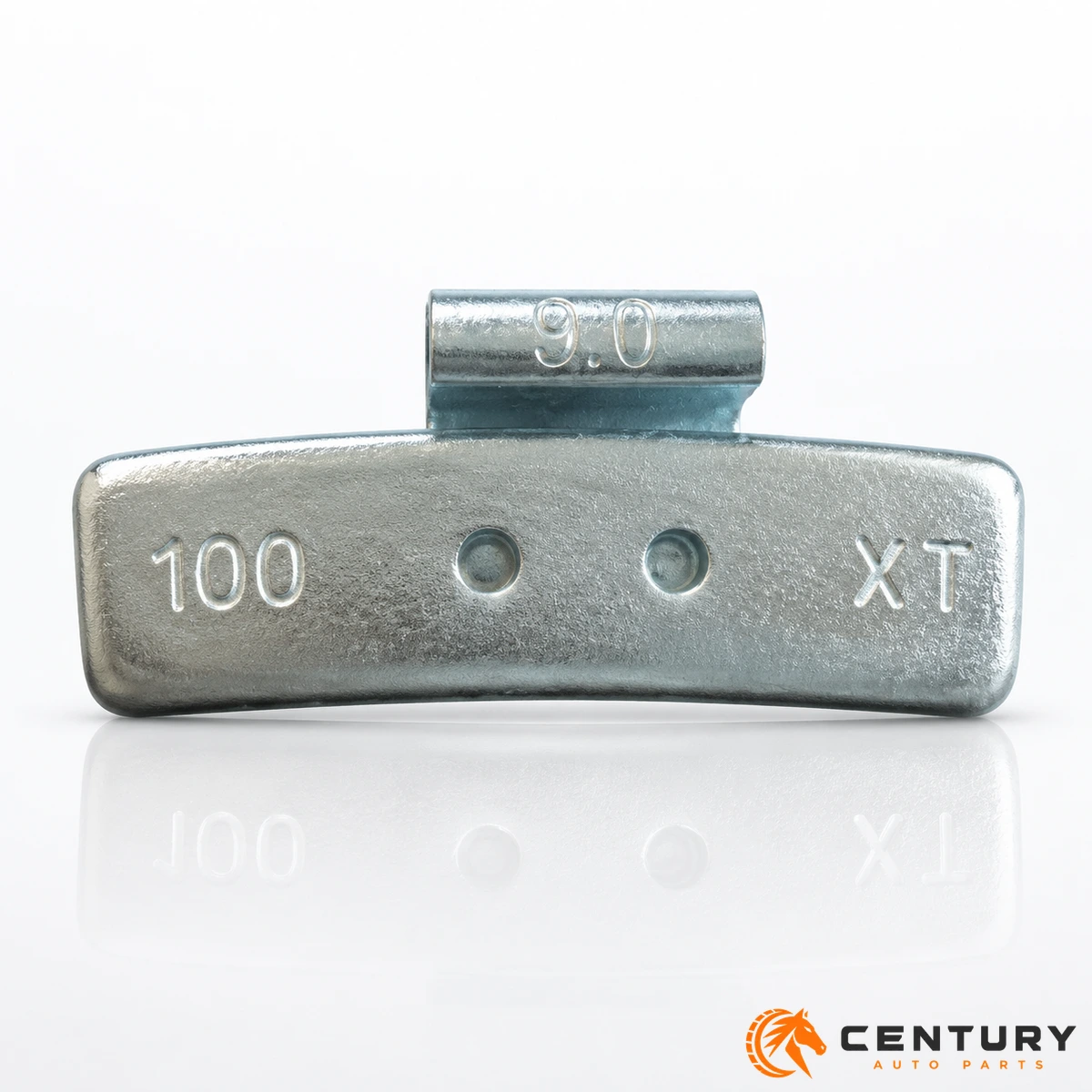
Never hammer a clip-on weight directly onto a painted alloy flange, and never reuse a weight whose clip has been bent open - it will not hold at speed. For the failure modes to watch for, see why clip-on wheel weights break or corrode.
What to check before you buy
- Clip profile range - confirm the factory covers the profiles your market services.
- Coating quality - ask for salt-spray test data, and confirm the clip cavity is coated to prevent galvanic corrosion.
- Weight tolerance - request the tolerance band and a sample inspection report.
- Materials - choose Fe or Zn for lead-free markets.
- Packing - bulk or private label, in the box counts your customers expect.
Build a complete range with both clip-on and wheel balancing weights, and see our guide to choosing wheel balancing weights. To request a quote, contact our team.
- Directive 2000/53/EC on end-of-life vehicles - lead restriction background for balance weights
- Product materials, profiles and packing: Century Auto Parts published product data