
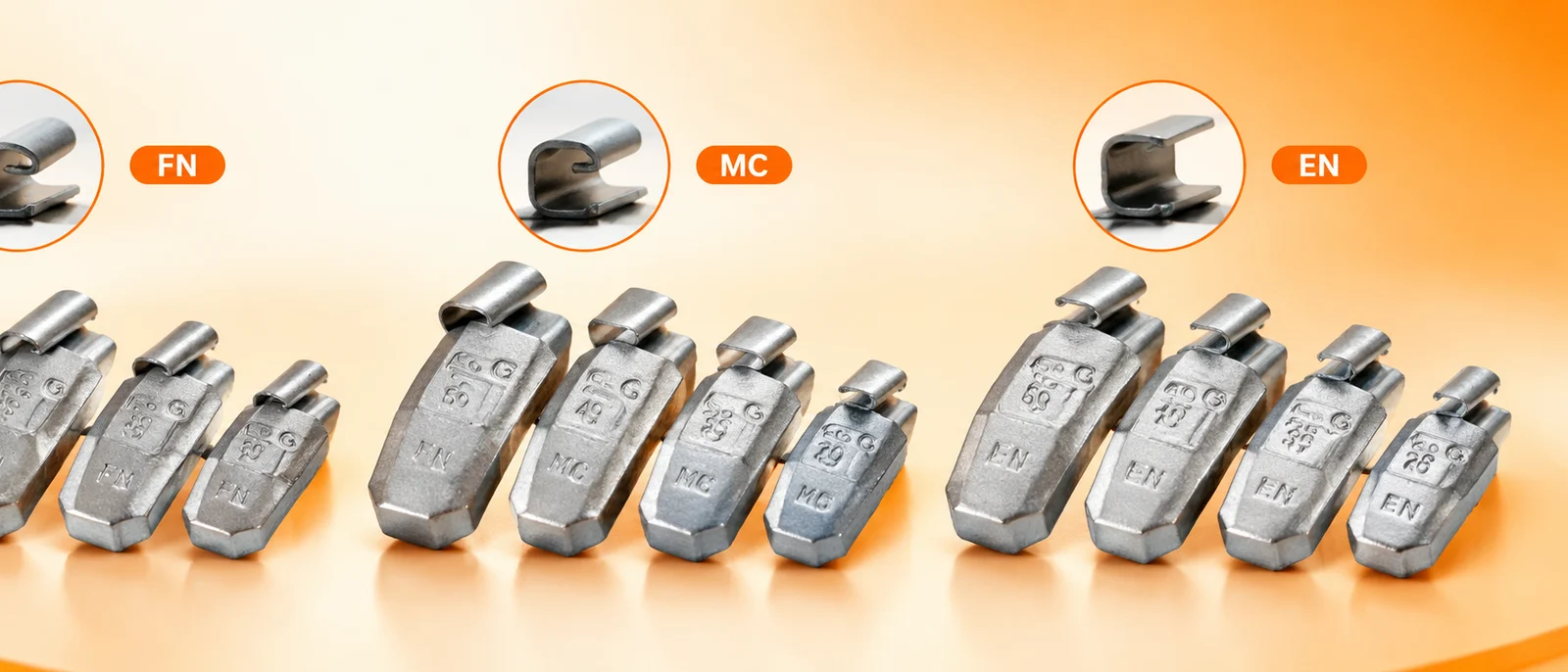
Two clip-on weights that look similar can behave very differently, because the part that matters most is the clip profile - the shape of the spring steel clip that grips the rim. Fitting the wrong profile is one of the most common causes of weights coming loose. This guide explains the main profiles and how to match them.
Why the profile matters
Rim flanges are not all the same. A steel wheel has a different flange thickness and shape from an alloy wheel, and truck rims differ again. The clip is stamped and heat-treated to a specific profile so it grips one flange type correctly. A clip that is too loose will not hold; one that is too tight can crack or damage the rim edge.
Common clip profiles
| Profile | Typical application | Notes |
|---|---|---|
| FN | Alloy rims | Very common clip-on profile for alloy wheels |
| FNC | Alloy rims | Related variant for specific flange shapes |
| MC | Steel rims | Standard steel-wheel clip |
| AW | Certain alloy rims | Profile for particular alloy flange designs |
| EN / EA | European and other rims | Market-specific profiles |
| T-series (heavy duty) | Truck and commercial steel wheels | Up to 500 g masses |
Exact naming varies between manufacturers, so the practical approach is to match the clip to the rim by testing on the actual wheel, or to order by the rim type you are servicing.
How to match the profile to the wheel
- Identify the rim. Steel or alloy, and for commercial use, the truck rim type.
- Check the flange thickness and shape. This determines which clip geometry will grip properly.
- Test-fit a sample. Confirm the weight seats fully against the flange with no play.
- Stock a mix. Carry the profiles your customers actually service rather than a single type.
- Confirm coating. Fully coated clips resist corrosion and protect alloy rims from galvanic corrosion.
Choosing a supplier
Because profile naming is inconsistent, buy from a factory that can match profiles to your market and provide samples. Ask which profiles they tool in-house and whether they can supply profile sets with your private label. For the full range context, see our clip-on wheel weights buying guide and the Fe wheel balancing weights range.
Poor coating on the clip is the other common failure - see our guide to clip-on weight durability. To discuss profiles and samples, contact our team.
- Wheel weight clip profile terminology as used across the aftermarket - reference classification
- Product profiles and applications: Century Auto Parts published product data