
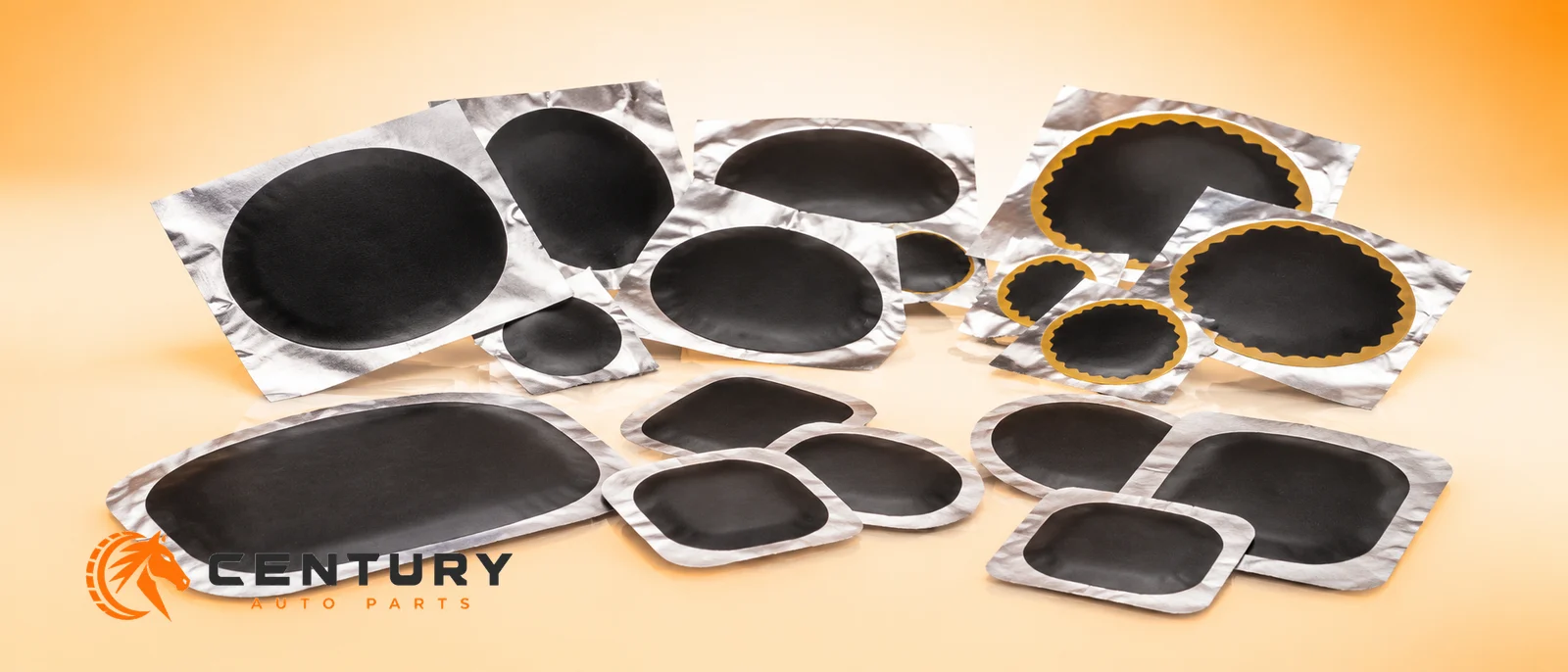
For distributors, tyre patches wholesale is a steady, repeat-purchase line: every puncture a workshop repairs consumes a patch, week in and week out. The margin is in the assortment - stocking the right sizes, styles and pack quantities so no customer ever hears "we don't have that size". This guide covers how patches are sized, what box and pack quantities to buy, US-style versus EU-style, private label, and how to assemble an assortment that turns a commodity into a dependable reorder business.
Why tyre patches are a distributors' staple
Unlike capital equipment, a patch is a low-cost consumable that is used up on every job. That creates two advantages for a wholesaler: predictable reorders (a workshop with steady volume uses a similar quantity month after month) and broad, shallow assortment demand (many sizes sold in modest quantities, which is exactly the mix a distributor is built to supply). Add in plugs, seal strings and repair consumables, and the repair bay becomes its own recurring revenue line. See the wider market in our tyre repair supplies guide.
How tyre patch sizes work
Patches are selected to the injury, not bought in one universal size. The key dimensions:
- Round patches - sized by diameter; the everyday choice for small tread punctures from nails, screws and similar round injuries.
- Oval and square patches - sized by length and width; chosen for larger or elongated injuries where a round patch would leave too little overlap.
- Ply and repair class - heavier units carry added reinforcement for bias-ply, commercial and higher-stress repairs, while lightweight units suit everyday passenger work.
A useful rule: the patch must reach beyond the injury to overlap the sound liner by the margin your repair standard requires. Buying a range of diameters and lengths is what lets a shop match the patch to the injury instead of forcing a wrong-size repair.
Box, pack and carton quantities
Wholesale economics are driven by pack size. Buyers generally choose between:
| Quantity | Best for | Trade-off |
|---|---|---|
| Small trial packs | Testing a new size or brand | Low commitment, higher per-unit cost |
| Standard boxes / boxes per size | Inventory for daily reorders | Balanced unit cost and stock turnover |
| Assorted cartons | Building a broad retail assortment | One mixed buy, easier to open a range |
| Full cartons / pallets | Established, high-volume sellers | Lowest unit cost, needs turnover |
The fastest sellers rarely justify the very largest carton unless you already move them monthly. A common strategy is to buy the top-moving sizes in fuller cartons and the long tail in assorted cartons, so stock breadth does not tie up cash in slow sizes.
US-style vs EU-style patches
The two regional constructions are the single biggest assortment decision a tyre patch wholesaler makes:
- US-style - self-vulcanizing radial and all-purpose patches that bond at room temperature with cement. Dominant in the Americas; fast and economical for everyday tread repairs.
- EU-style - patch units with ply reinforcement and a heavier construction, preferred across Europe and much of the Middle East, and the basis of the commercial and bias-ply lines.
Stocking both lets you serve mixed fleets and regional training habits from one warehouse - a real advantage when your customers themselves serve international fleets. Our full tyre patch range covers radial, bias and all-purpose units from 32 mm to 440 mm, 1 to 6 ply, in both constructions; the US vs EU comparison goes deeper on when each fits.
Purchasing the replacement layer: cement and buffers
Every cold patch needs cement, and nearly every repair needs a buffer. Wholesaling patches without these consumables leaves money on the table and service quality to chance - a workshop that runs out of cement cannot use the patches you just sold it. Pair each patch carton with the matching cement and buffer supply so the full repair process stays in stock. This is a genuine service advantage, not an upsell: it keeps your customers' results consistent and their loyalty to your line strong.
Private label tyre patches
Patches are one of the easiest products to private label because the packaging is the product on a workshop shelf and unit cost is low. Custom branding, retail-ready card packs and barcodes are standard; OEM/ODM orders carry a higher MOQ due to packaging tooling. A branded patch line builds a recurring buyer relationship that generic stock cannot - the customer reorders your box, not a commodity.
Building a profitable assortment: a working model
- Start with the volume sizes - the round and oval patches your market uses most every day.
- Add the style your market is trained on - US or EU construction first, then the other as a second range.
- Add the commercial and bias-ply sizes for truck and off-road shops if your region supports heavy work.
- Carry cement, buffer and plugs alongside so the bay is never held up by a missing consumable.
- Reorder on turnover, not on habit - track the sizes that actually move and adjust the assortment monthly.
Consolidate patches with wheel weights, tyre valves and repair materials in one shipment to cut landed cost per unit - the standard play at a full-line factory like Century Auto Parts.
Cold patch vs other repair lines
Patches are the permanent-repair backbone, but they sit alongside plugs and strings in every repair bay:
- Patches - restore the inner liner from inside; the permanent standard for crown repairs.
- Mushroom plugs - combine a stem and patch to fill the puncture and seal the liner in one step. See mushroom plug vs seal string.
- Seal strings - quick temporary roadside repairs. See patch vs plug.
Wholesaling all three lets a distributor cover an entire repair bay from one account, which is exactly how cold and hot patching decisions play out in practice.
The distributor's bottom line
Tyre patches are a low-friction consumable: steady demand, no seasonal cliff, and a natural private-label path to recurring orders. The profit comes from the breadth and the associated consumables, not from any single box. Buy the range, match it to your market's style, and keep cement and buffers flowing with every carton.
Build your own tyre patch assortment, or send your product list for a wholesale quotation with consolidated shipping.
- Patch sizes, ply ratings and series: Century Auto Parts published product data (CTR-TPU, CTR-TPE, US & EU styles)
- Wholesale packing, MOQ and private-label terms: Century Auto Parts published trade information