
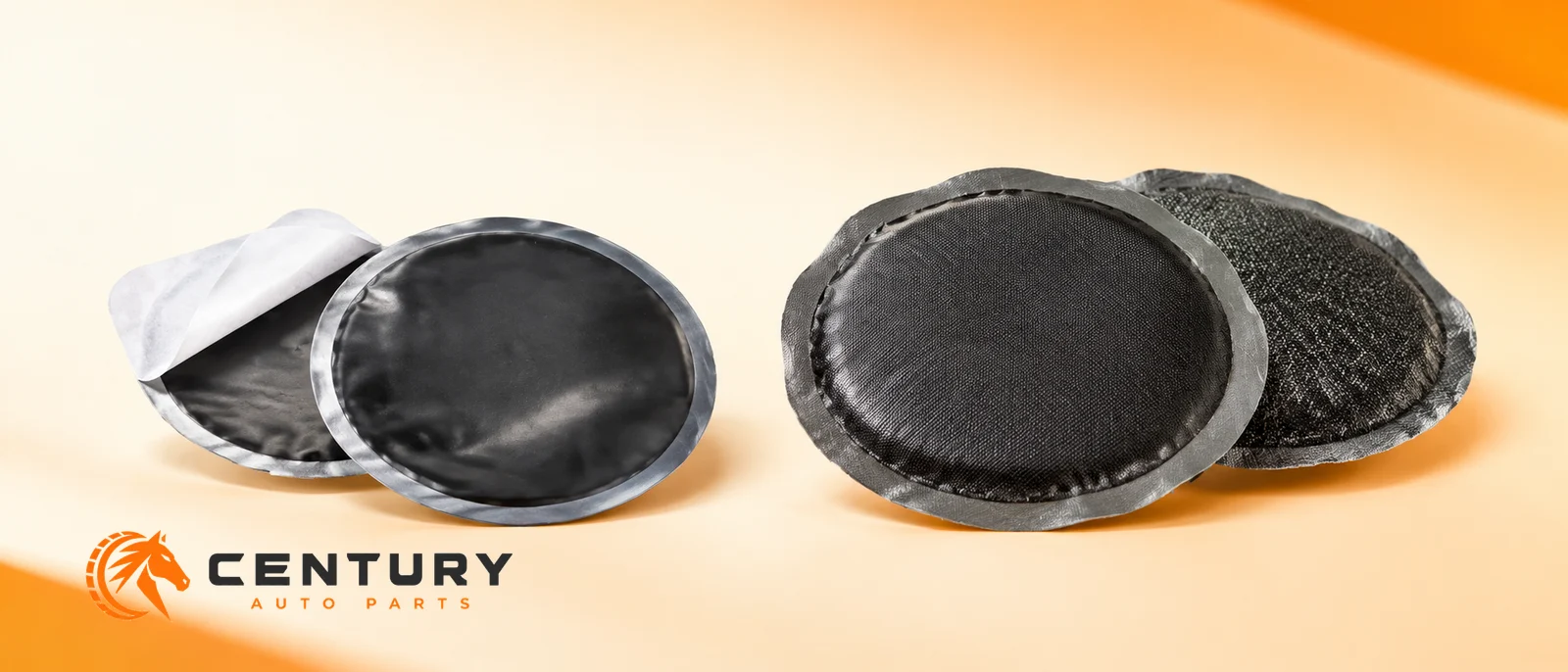
Workshop conversations about cold patch vs hot patch come down to one question: how much bond strength does this specific repair need? Both methods are permanent when done right, but they suit different injuries, tyres and speed of work. Getting the choice right protects the customer, the workshop's liability and its reputation - and it shapes what a distributor should stock. This guide covers the chemistry, the process, the injury types, the patch constructions and the buying decisions behind each method.
What a permanent tyre repair actually has to achieve
A repair is not a plug that stops air today; it has to restore the tyre's structure for the rest of its life. That means three jobs at once:
- Seal the injury so air cannot escape through the puncture channel.
- Restore the inner liner so the tyre holds pressure and the repair does not lift.
- Keep the repair attached under heat, flexing and centrifugal force at speed, for thousands of kilometres.
Both cold and hot methods achieve all three when the injury is inside the repairable area and the preparation is correct. The difference is how the bond is created, and therefore how much punishment it can take.
How cold (chemical) patching works
A cold patch relies on a self-vulcanizing cement applied to a buffed, cleaned inner liner. The cement reacts chemically at room temperature and bonds the patch to the tyre without external heat. The process is:
- Inspect the injury and confirm it is inside the repairable crown/tread area.
- Buff the inner liner around the injury to a clean, textured surface.
- Clean away buffing dust and contamination.
- Apply cement and let it dry to a tacky film (drying time matters - a wet cement layer will not bond).
- Press the patch firmly with a roller, working from the centre out to remove trapped air.
- Fill the puncture channel from the outside where the repair calls for it.
The result is permanent for standard tread injuries and is the everyday workhorse of the repair bay. The chemistry is what makes it fast: no heat, no curing press, just cement, patch and roller.
How hot vulcanizing works
A hot vulcanizing patch (also called a hot-cure or vulcanizing patch) is cured under controlled heat and pressure - typically with a spot vulcanizer or curing pad held at around 140-150 C for a set time. The heat and pressure cross-link the patch and the surrounding rubber into one continuous material, so the bond can slightly exceed the strength of the original rubber. The process is slower and needs equipment, but it delivers the maximum bond available:
- Inspect and prepare the injury, often with more aggressive buffing for heavy sidewall work.
- Apply the vulcanizing patch or repair unit.
- Clamp the spot vulcanizer or curing pad over the repair.
- Cure under heat and pressure for the specified time.
- Cool and inspect before the tyre returns to service.
Because it fuses rather than glues, hot curing is the choice for the repairs that take the most punishment.
Side-by-side comparison
| Cold (chemical) patch | Hot vulcanizing patch | |
|---|---|---|
| Bond | Self-vulcanizing cement reacts at room temperature | Cured under heat and pressure |
| Equipment | Buffer, cement, roller | Spot vulcanizer / curing pad (~140-150 C) |
| Speed | Fast, everyday repairs | Slower, higher-level repairs |
| Strength | Permanent for standard tread injuries | Maximum - heavy-duty, sidewall, bias-ply, retread |
| Best injuries | Crown/tread punctures, nails, screws | Sidewall, shoulder, bias-ply, commercial, retread |
| Cost | Lower per repair | Higher equipment + time |
| Skill | Moderate - preparation is everything | Higher - heat, pressure and timing control |
When to choose cold patching
For the majority of punctures and tread injuries on passenger and light-truck tyres, a cold patch is the everyday answer: fast, cost-effective and permanent when the surface is properly buffed and the cement cures fully before the tyre is used. Our CTR-TPU and CTR-TPE patch ranges cover round, oval, square and all-purpose cold patches across the sizes a workshop sees daily. Cold patching is also the right default for a shop that does not want to invest in vulcanizing equipment but still needs to deliver permanent repairs.
When to choose hot vulcanizing
Hot curing is reserved for the repairs that take the most punishment: heavy sidewall injuries, bias-ply and commercial tyres where the bond must slightly exceed the surrounding rubber. The continuous pressure-and-heat cure delivers that margin. Heavy-duty sidewall and bias-ply options are available in the CTR-TPU HD series - see the US-style patch range. If a shop services truck fleets, retreads or off-road bias-ply tyres, a hot-cure line is not optional - it is what lets them take the repairs the cold method should refuse.
Patch construction: TPU, TPE and reinforcement
The patch material decides how the repair behaves in service:
- TPU (thermoplastic polyurethane) - tough, flexible and resistant to heat and abrasion; the standard for durable repairs, including heavy-duty units.
- TPE (thermoplastic elastomer) - softer and more economical, well suited to everyday passenger and light-truck tread repairs.
- Reinforced / layered patches - carry additional fabric or cord layers to restore structure on larger or higher-stress injuries.
The patch shape matters too: round patches suit small round punctures, oval and square patches cover larger or elongated injuries, and all-purpose units bridge the gap for mixed workshop use. The right shape and size is chosen from the injury dimensions, not from habit.
Repairable vs non-repairable injuries
No method should be used outside the repairable area. As a rule of thumb:
- Repairable - punctures and injuries in the crown/tread area, within the limits the repair standard and tyre maker allow.
- Handle with care - shoulder and sidewall injuries; these are where hot curing earns its place, and where many makers restrict repair.
- Not repairable - injuries in the sidewall that compromise the casing, damage to the bead, run-flat damage, and any injury where the tyre maker prohibits repair.
A workshop that repairs outside these limits creates a liability far bigger than the price of a new tyre - which is why the method choice and the injury assessment go together.
Preparation is the real variable
Ask any experienced repair technician what decides whether a patch holds, and the answer is preparation, not the patch brand. The bond depends on:
- Buffing to a clean, textured surface - a glossy or under-buffed liner will not key.
- Removing all buffing dust and contamination - dust is the enemy of adhesion.
- Letting the cement dry fully - a wet layer traps solvent and weakens the bond.
- Rolling out trapped air - air pockets become lift points in service.
- Correct cure time and temperature for hot repairs - under-curing leaves the bond short.
This is why selling cement and buffer supplies alongside patches is not an upsell - without them the patch cannot do its job. A distributor who supplies the full repair kit keeps the workshop's results consistent.
Cold patch vs mushroom plug vs seal string
Patching is only one of three repair families, and the choice depends on the injury:
- Patch - restores the inner liner from inside; the permanent standard for crown injuries.
- Mushroom plug - a combined plug-and-patch unit that fills the channel and seals the liner in one step; fast and permanent for suitable punctures. See mushroom plug vs seal string.
- Seal string - a cord-based emergency repair inserted from outside; quick but not a permanent structural repair. See patch vs plug.
For the one-step option between a patch and a plug, the mushroom plug is often the best balance of speed and permanence on suitable tread injuries.
Bias-ply vs radial tyres
Repair method and patch choice also depend on tyre construction. Radial passenger and truck tyres dominate modern fleets, and cold patches handle their tread injuries well. Bias-ply tyres - still common in agricultural, off-road and some commercial applications - flex differently and often call for heavier, hot-cured repair units. Stocking both cold and HD ranges lets a shop serve both constructions without turning work away.
What to stock: a practical matrix
- Cold patches in the most-used round, oval and square sizes for everyday tread repairs - the volume item.
- Mushroom plugs in the common stem diameters for fast permanent repairs.
- Heavy-duty and bias-ply patches for workshops running hot-cure lines.
- Cement and buffer supplies - the bond depends on preparation, not just the patch.
- Seal strings as an emergency item, clearly positioned as temporary.
A mixed assortment matched to the shop's mix of passenger, truck and off-road work is what keeps reorders steady and avoids the "we don't have the size" lost sale.
The distributor's view
Patches are a consumable with steady, predictable demand: every puncture a workshop repairs uses one patch and a little cement. The commercial opportunity is in the breadth of the assortment - cold and HD, round/oval/square, TPU and TPE, plus plugs and strings - so one supplier can cover the whole repair bay. Consolidated with wheel weights, valves and TPMS, the repair range becomes part of a full tyre-service order rather than a separate purchase.
Browse the full tyre patch range, compare methods in patch vs plug, or contact us to build a mixed patch assortment for your market.
Cost per repair and why the cheap method can cost more
On paper a cold patch is the cheaper repair: a patch, a smear of cement and a few minutes of labour. But cost per repair is not the same as profit per repair. A cold patch used on an injury that needed hot curing will fail early - and a comeback repair costs the workshop the labour twice, the patch twice, and often the customer. The right comparison is total cost of a durable repair, not the price of the patch alone.
Hot curing looks more expensive because of the equipment and the time under the press, but it opens up repairs a cold-only shop has to refuse: sidewall injuries, bias-ply tyres, commercial and retread work. For a shop serving truck fleets, those jobs are often the highest-value repairs on the schedule, and refusing them sends the fleet to a competitor. The equipment pays for itself on the jobs it lets the shop keep, not on the passenger tyres it could have patched cold anyway.
Safety, liability and the decision to repair
The decision to repair is a safety decision before it is a commercial one. A tyre repaired outside the repairable area, or repaired with a method that does not match the injury, can fail at speed. That is why the method choice sits alongside a strict injury assessment: if the injury compromises the casing, the bead or the sidewall structure, the answer is a new tyre, not a better patch.
Documenting the repair - the injury, the method, the patch used - protects the workshop if the tyre later fails for an unrelated reason. A shop that can show it followed the repair standard and used the correct method is in a very different position from one that patched a sidewall with a cold patch because it was quick. Selling the customer the right repair is also selling them the reason to come back.
Frequently asked questions
Is a cold patch as strong as a hot patch? For standard tread injuries, a correctly applied cold patch is permanent. Hot curing delivers a stronger bond and is the right choice for sidewall, bias-ply and heavy-duty work.
Can I hot patch a passenger tyre? You can, but it is usually unnecessary for a normal tread puncture - a cold patch is faster and fully adequate. Save hot curing for the repairs that need it.
Do I need a vulcanizer to run a repair bay? No. A cold-patch bay with a buffer, cement and roller handles the majority of passenger and light-truck work. A vulcanizer is what lets you take the heavier repairs.
How long should cement dry before the patch goes on? Until it forms a tacky film. Applying a patch onto wet cement traps solvent and weakens the bond - this is one of the most common causes of a patch lifting.
What patch shape should I use? Match the shape to the injury: round for small round punctures, oval or square for larger or elongated injuries, all-purpose for mixed workshop use.
- Cold vs hot vulcanizing repair practice, repairable-area limits and preparation steps: industry-standard tyre repair guidance
- Patch materials (TPU/TPE), shapes and HD/bias-ply ranges: Century Auto Parts published product data
- Vulcanizing temperature range (~140-150 C): standard hot-cure repair practice