
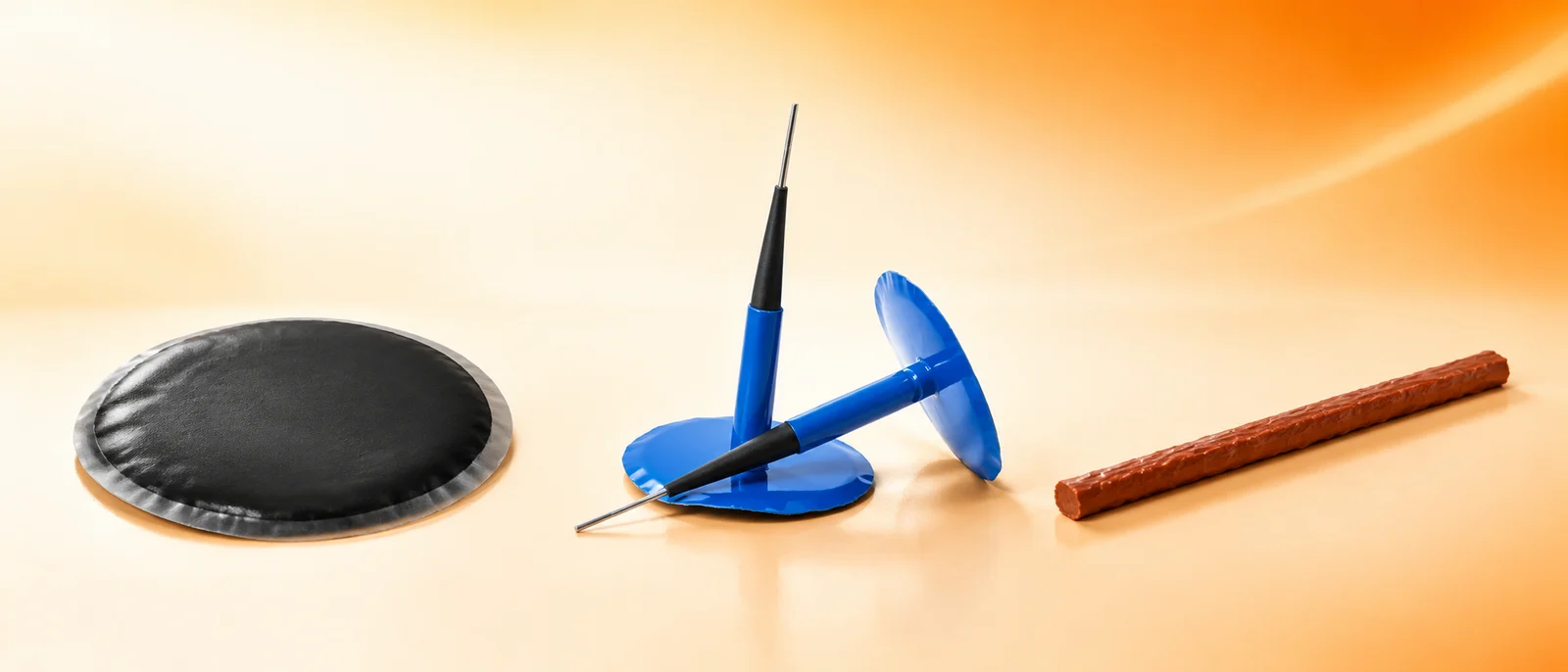
Walk into almost any tyre shop with a puncture and you will hear the same question in different words: patch or mushroom plug? Both are permanent repairs when done correctly, yet they are often priced differently and recommended for different situations. Drivers want to know whether paying more actually buys a safer tyre. Workshop owners want to stock what gives a clean result and repeat customers. This guide explains the difference in plain language, when to choose each, and what to ask before you say yes.
Patch first: the inner-liner bandage
A tyre patch is a rubber pad. The technician removes the tyre, buffs the inner liner around the injury, applies a self-vulcanizing cement and bonds the patch to the inside of the tyre. It is quick, low-cost and permanent for a simple tread puncture - but it only seals the inside of the hole. The outer channel in the tread remains open, so on a very small, clean puncture this is rarely a problem. For a small nail or screw hole on a car used mainly around town, a patch is a perfectly good everyday repair.
The image that clicks for most people: a patch is like a bandage on the inside of the tyre. It stops the leak cleanly and permanently for the right injury.
The mushroom plug: the one-step full seal
A mushroom patch plug looks like its name: a flat cap with a stem attached. The technician reams the puncture, draws the stem through the injury from the inside, trims it level on the outside and presses the cap onto the buffed inner liner. In a single step it closes both the inner liner and the injury channel itself - like a seal and a stitch at once.
Because it fills the whole channel, the mushroom plug is the stronger choice for larger or angled injuries, and it is the repair most shops prefer for the front axle and for tyres that run fast and hot. On a new or expensive tyre - and on the heavier, higher-torque tyres of electric vehicles - the extra margin of a mushroom repair is simply peace of mind.
Our mushroom patch plug range covers the common stem diameters and cap sizes used on passenger cars and light trucks. See mushroom patch plugs for sizes and availability.
Why the mushroom repair costs more
The price gap is real work, not margin alone:
- A structured part. A mushroom unit is a moulded plug-and-patch assembly, more complex to make than a flat pad.
- More steps. It needs reaming, drawing the stem through, trimming and sealing - not just buff-and-press.
- Often a balance as well. Many premium repairs include a dynamic balance so the wheel does not vibrate at speed.
That third point matters: a repair that removes weight from a wheel can throw it out of balance. For a front wheel especially, wheel balancing after a repair is not an upsell - it is how the wheel stays smooth.
Patch or mushroom: a simple decision guide
| Your situation | Best choice |
|---|---|
| Small nail / screw, clean hole, town driving | Patch |
| Larger or angled injury, highways and long trips | Mushroom plug |
| New or expensive tyre, or electric vehicle | Mushroom plug |
| Front axle, fast and hot running | Mushroom plug |
| Sidewall injury, bulge, cracks, or very worn tyre | Do not repair - replace |
Some tyres cannot be repaired at all
No method fixes everything. A sidewall puncture is the classic cannot: the sidewall is the thinnest, most flexible part of the tyre and it flexes on every rotation. A bulge, a cracked casing, an injury too large for the repair standard, or a badly aged tyre should be replaced, not patched. The safety decision comes before the price decision.
Ask the shop these three questions
Do not just ask the price. Ask:
- Is this a patch or a mushroom plug?
- Does the price include a wheel balance?
- Is my injury suitable for this repair, and is it inside the repairable area?
Two of the three routinely separate a careful shop from one that is guessing.
The workshop and distributor view
Both repairs belong in a full tyre-service range. A tyre patch is the fast, economical workhorse; a mushroom patch plug is the higher-value repair for the jobs that run fastest. Alongside them, a tyre seal string covers genuine roadside emergencies (temporary, until a permanent repair is fitted). Choosing by the injury - not by habit - is what protects the customer, the workshop's reputation and the distributor's reorder rate. For the wider comparison across all three methods, see patch vs plug vs mushroom plug and mushroom plug vs seal string.
Frequently asked questions
Is a patch enough for a puncture? For a small, clean tread puncture, yes - a correctly fitted patch is a permanent repair and the everyday standard.
Why is a mushroom plug recommended for fast driving? Because it seals the whole injury channel, not just the inner liner, which is more resistant on tyres that run hot and flex hard.
Should I always choose the more expensive repair? No. Match the repair to the injury, the tyre and the driving. The more expensive option is only worth it when the situation calls for it.
Can a mushroom plug be used on any puncture? Only inside the repairable area and within the tyre maker's limits. Outside those, no repair method applies.
- Patch and mushroom plug repair practice, repairable-area limits and fitting steps: industry-standard tyre repair guidance
- Patch, mushroom plug and seal string ranges and fitment: Century Auto Parts published product data