
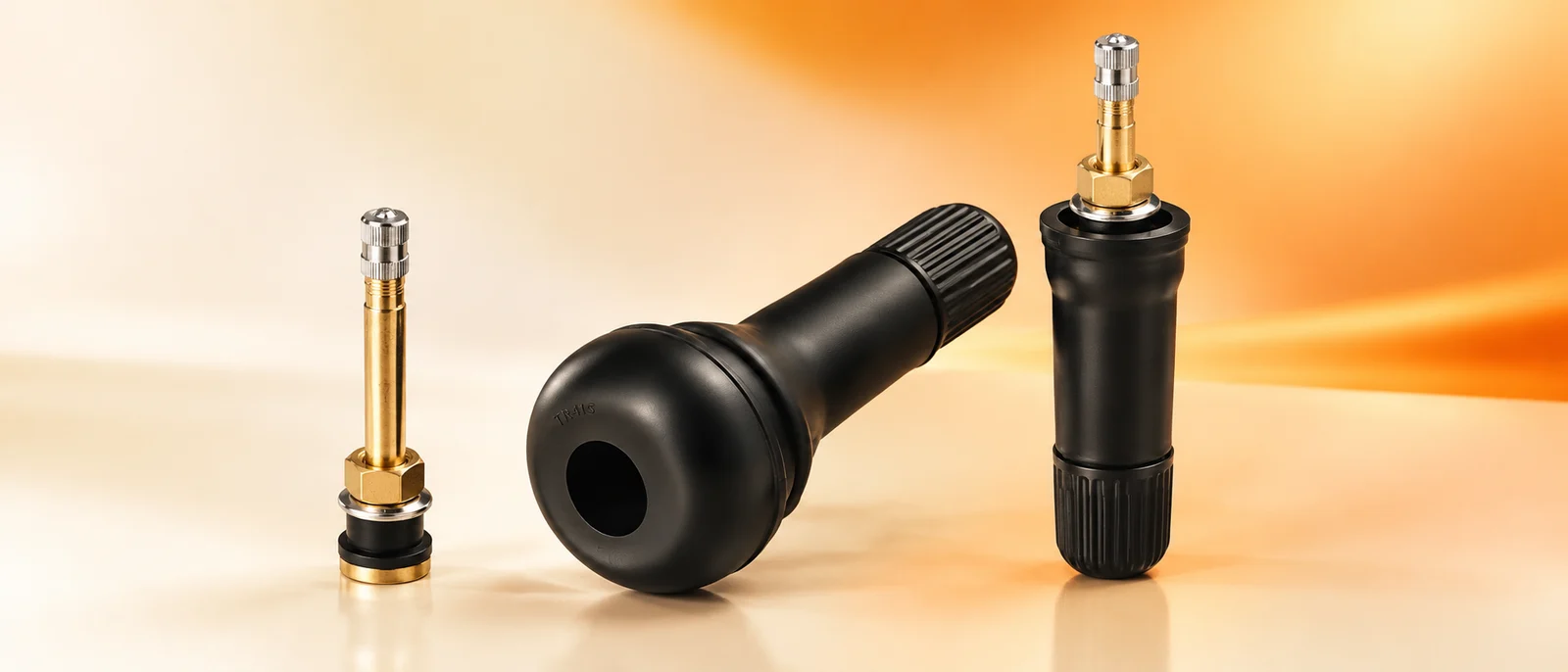
Every tyre valve has two parts that can leak: the stem you can see, and the tyre valve core hidden inside it. The core is a cheap, spring-loaded insert that screws into the stem - yet it is the component that actually holds the air. A large share of "mystery" slow leaks in workshops trace back to a tired, dirty or wrongly tightened core, not the valve body. For distributors and fleets, cores are a classic high-turnover consumable: small unit cost, big service impact.
What the valve core does
The core is a spring-loaded check valve. At rest, the spring presses the poppet against the seat and seals the air inside the tyre. When you push the centre pin - with an inflation chuck, a pressure gauge or a deflator - the passage opens. Release the pin and the seal closes again. Because every inflation cycle works the spring and seat, the core wears and eventually leaks.
On standard stems the core threads into a bore commonly designated 5V1 under TRA conventions, which is why replacement cores are effectively universal across standard passenger valves.
Core types: 9002#, 7002# and TPMS
| Core type | Used in | Why it exists |
|---|---|---|
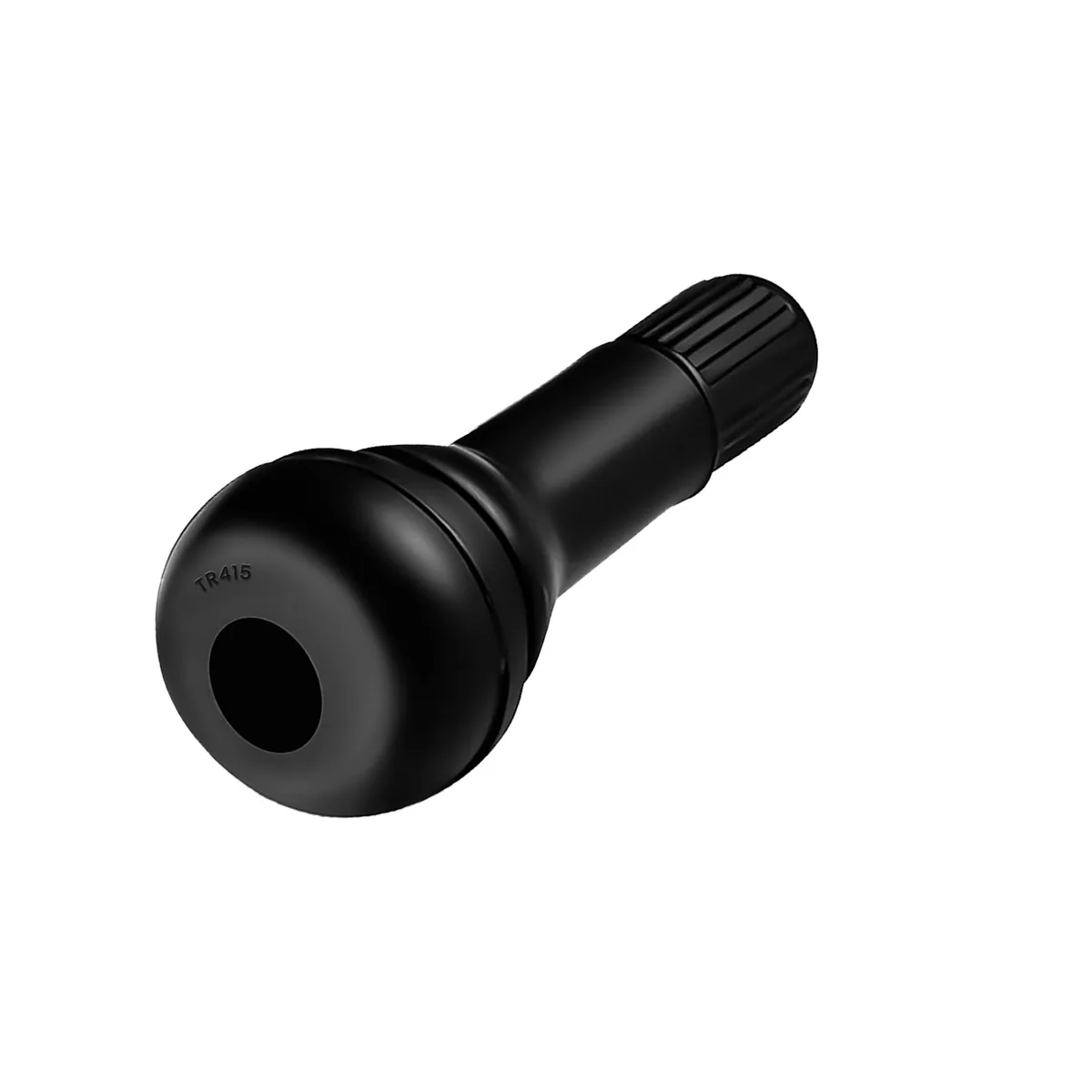
| 9002# (standard) | TR412-TR415 passenger valves, TR570-TR572 truck valves | The default core for the vast majority of road vehicles - our TR and TR57 series valves are supplied with it |
| 7002# (large bore) | TRJ650 agricultural swivel valves | Faster airflow for large agricultural tyres and liquid ballast filling |
| TPMS cores | TPMS valve stems (service kits) | Nickel-plated variants matched to sensor stems to resist corrosion and keep readings accurate |
See how the cores pair with stems and caps in the tyre valve types guide, and the matching caps in our tyre valve caps guide.
Torque: the detail that causes comebacks
Component makers commonly specify a tightening torque of roughly 0.25 N.m (2-3 in-lb) for standard cores. Both directions of error cause leaks: over-tightening crushes or distorts the sealing seat; under-tightening lets pressure push past the threads. Core tools with a torque feature exist for exactly this reason - relevant for TPMS service in particular, where an over-stressed core can also distort readings.
Diagnosing a leaking core
| Symptom | Quick test | Fix |
|---|---|---|
| Slow pressure loss, no visible damage | Bubble solution on the valve mouth - bubbles at the pin mean the core | Replace the core (and cap) with a core tool |
| Leak only when the valve is touched | Bubbles around the stem base, not the pin | The stem seal or grommet, not the core - replace the valve |
| Cap missing, dusty thread | Grit has likely entered the core | Replace core and cap together; never leave stems uncapped |
Replacement practice for workshops and fleets
- Replace at every tyre service. The core and cap cost almost nothing compared with a comeback visit.
- Use a core tool - not pliers - to avoid twisting the stem.
- Standardise the stock. One 9002# core covers the bulk of a fleet; add 7002# only if you service agricultural large-bore valves.
- Torque to spec (around 0.25 N.m) rather than "hand tight plus a bit".
Buying cores in bulk
All Century Auto Parts valves are supplied complete with brass cores and caps, and we also sell cores separately as consumables for distributors and fleet workshops. Mixed orders with valve stems qualify for consolidated shipping - browse our tyre valve range or send us your list for a quotation.
- Thread designations (5V1 bore conventions) per TRA (Tire and Rim Association) practice for valve cores
- Torque guidance per component maker service specifications (commonly ~0.25 N.m for standard cores)
- Core and stem pairings (9002#, 7002#, TPMS): Century Auto Parts published product data