
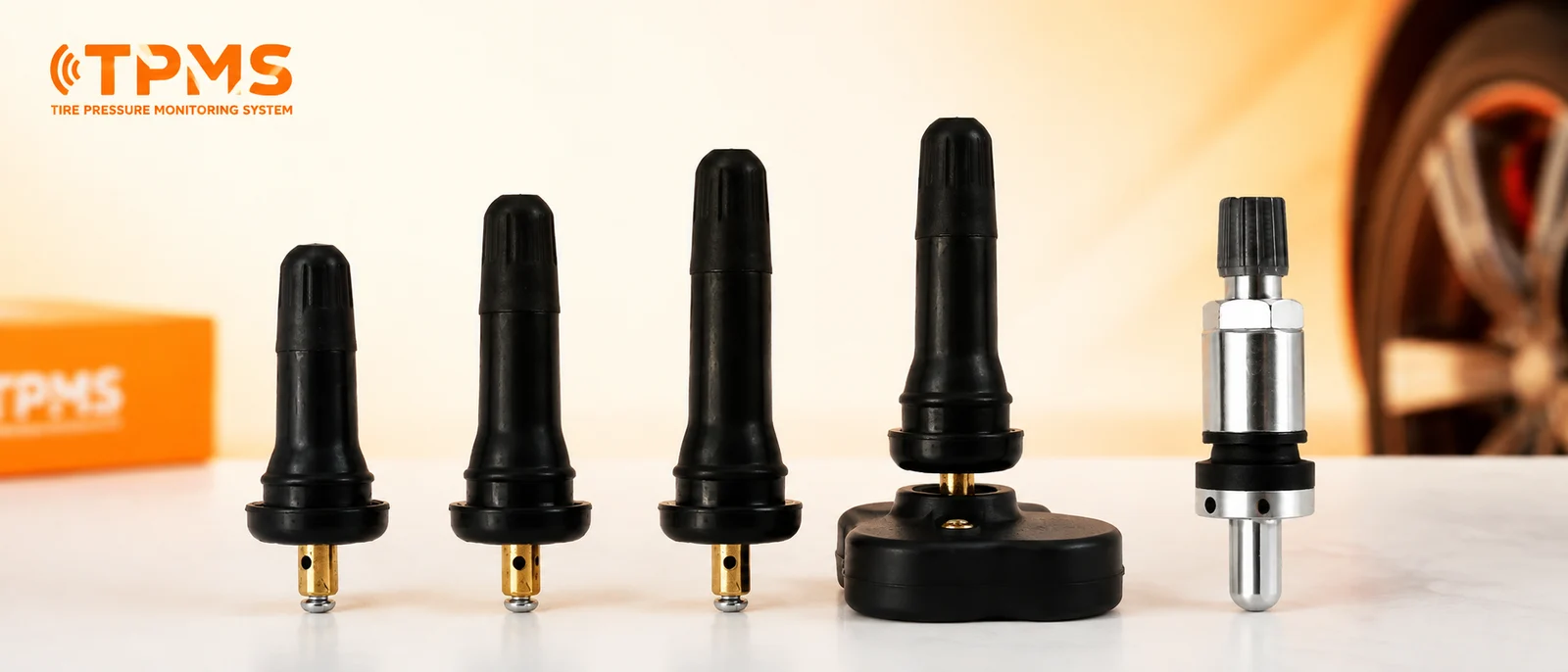
A TPMS valve stem looks like a standard snap-in valve, but choosing wrong means air leaks, warning lights that will not clear, or a cracked sensor at the next service. For distributors, TPMS is also the fastest-growing valve category as more countries mandate tyre pressure monitoring. This guide covers the decisions that matter: snap-in vs clamp-in, materials, application-specific vs universal, and the service-kit practice workshops expect you to stock.
Snap-in vs clamp-in: the first fork
| Type | Construction | Typical use | Service notes |
|---|---|---|---|
| Snap-in | EPDM rubber body around brass spine | Most passenger cars - Toyota, VW, GM, BYD and similar | Faster fitment; replace the whole stem at each service |
| Clamp-in | Aluminium or brass stem with retaining nut | European marques, high-pressure and truck applications | Reusable stem body; seals/nut replaced from a service kit |
Snap-in dominates volume - the majority of our 47 TPMS stems are snap-in for exactly that reason. Clamp-in stays necessary wherever nut-fixed metal stems are OEM fitment.
Materials: what actually fails
The rubber is the wear item. Quality EPDM resists ozone and heat cycling; cheap compounds crack at the rim hole - the classic TPMS leak complaint. On metal parts, brass fittings and nickel-plated valve cores resist the galvanic corrosion that seizes caps and sensors on aluminium stems. For corrosion behaviour across valve types, see our valve core guide and valve cap guide.
Application-specific vs universal
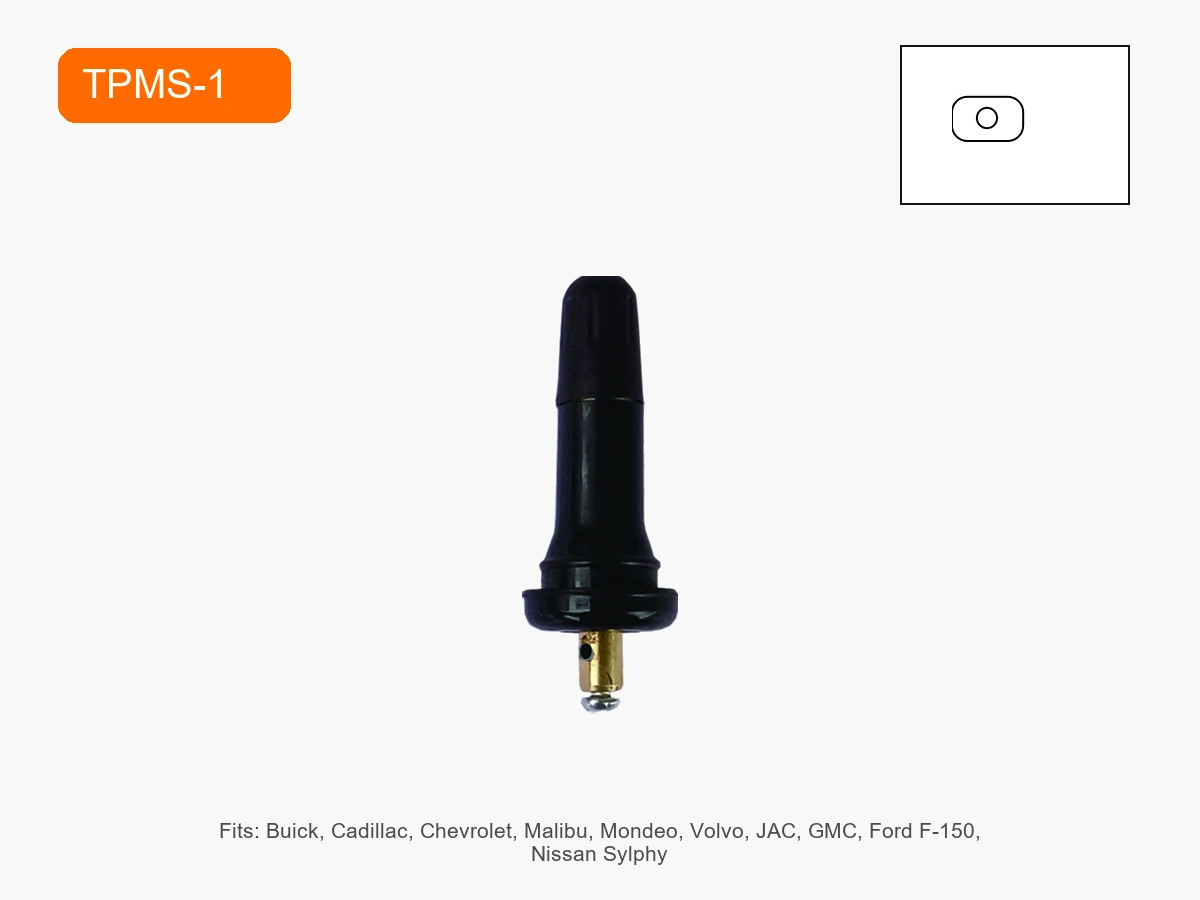
- Application-specific stems - matched by make and model (Buick, Toyota, BMW, Mercedes-Benz, VW, Geely, BYD and more). First choice when fitment certainty matters: OEM-equivalent geometry, no adapter parts.
- Universal stems - one SKU pairs with programmable sensor systems. Our TPMS-30 covers the Autel ecosystem, which lets a workshop stock one stem line instead of dozens. Confirm sensor-brand pairing before switching a customer to universal.
Fitment checks before you quote
- Rim hole diameter - must match the stem bore spec (standard Schrader holes are the norm, but verify on steel commercial rims).
- Sensor interface - the stem must accept the sensor head's thread or clip geometry of that exact sensor model.
- Pressure rating - our stems are rated to 80 PSI; high-pressure commercial service needs confirmation per application.
- That the sensor frequency is irrelevant to the stem - 315/433 MHz is a sensor property, choose the stem by fitment, not frequency.
Service kits: the revenue workshops forget to stock
Every sensor service needs a kit: core, cap, nut, seal and grommet where applicable. The rule across every sensor maker is never reuse sealing hardware. Distributors who bundle kits with stems protect customers from comebacks and sell a consumable that reorders itself - extend this with the TPMS maintenance guide for fleet programs.
Buying TPMS stems in bulk
Browse the full application list in our TPMS valve range. Send your target vehicle mix - brand share by market is enough - and our team will map it to application-specific and universal SKUs with a consolidated quotation.
- Stem construction, pressure rating (80 PSI) and application coverage: Century Auto Parts published product data (TPMS-1 to TPMS-47)
- Service-kit replacement practice per sensor maker service specifications (new hardware at every sensor service)
- TPMS mandate and fitment conventions: US TREAD Act rules, EU UNECE R141, China GB standards